AI Search Optimization For Social Media: How To Get Your Content Cited By AI
08 MIN.

Learn how to conduct a social media audit across multiple profiles in 10 simple steps, using free templates and tools to make your life easier.

For brands managing several social media platforms at once, keeping track of what’s working and what’s not can be a challenge.
Perhaps you set a goal for each channel several months ago, but haven’t re-evaluated it since. Maybe you devised a solid strategy last year, but since then things have changed and it’s time to re-assess performance and audience engagement to see what – if anything – needs to change.
This might just be the perfect time for a social media audit.
Done right, an audit doesn’t just show you what you could be doing better. It gives you a roadmap for what to do next. It helps you spot gaps, streamline your strategy, and figure out which profiles are pulling their weight. Even more importantly, it gives you a chance to pause, regroup, and make sure that what you’re doing on social media is still aligned with your wider business goals.
So, let’s take a look at what a social media audit involves and how to do one effectively.
A social media audit is a structured, in-depth review of your brand’s social accounts.
The goal of a social media audit is to evaluate social media performance, pinpoint strengths and weaknesses, and make better decisions about where to focus your time and resources.
![Social Media Audit Template Analyze key metrics across social media platforms, compare performance over time, and identify your top performing content.{{ include_custom_fonts({"Gilroy":["Audacieux","Moyen","Semi-gras"]}) }}](https://hubspot-no-cache-eu1-prod.s3.amazonaws.com/cta/default/143669362/interactive-252730760396.png)
Think of it like a digital spring clean. You're not just dusting off your profiles, you're taking stock: Are you showing up consistently across all channels? Is your content hitting the mark? Are you wasting time (and budget) on underperforming platforms? Are your visuals, tone of voice, and messaging aligned with your brand guidelines?
Audits help you move away from guesswork. Instead of running on autopilot, you get clarity on what’s working and where you can improve.
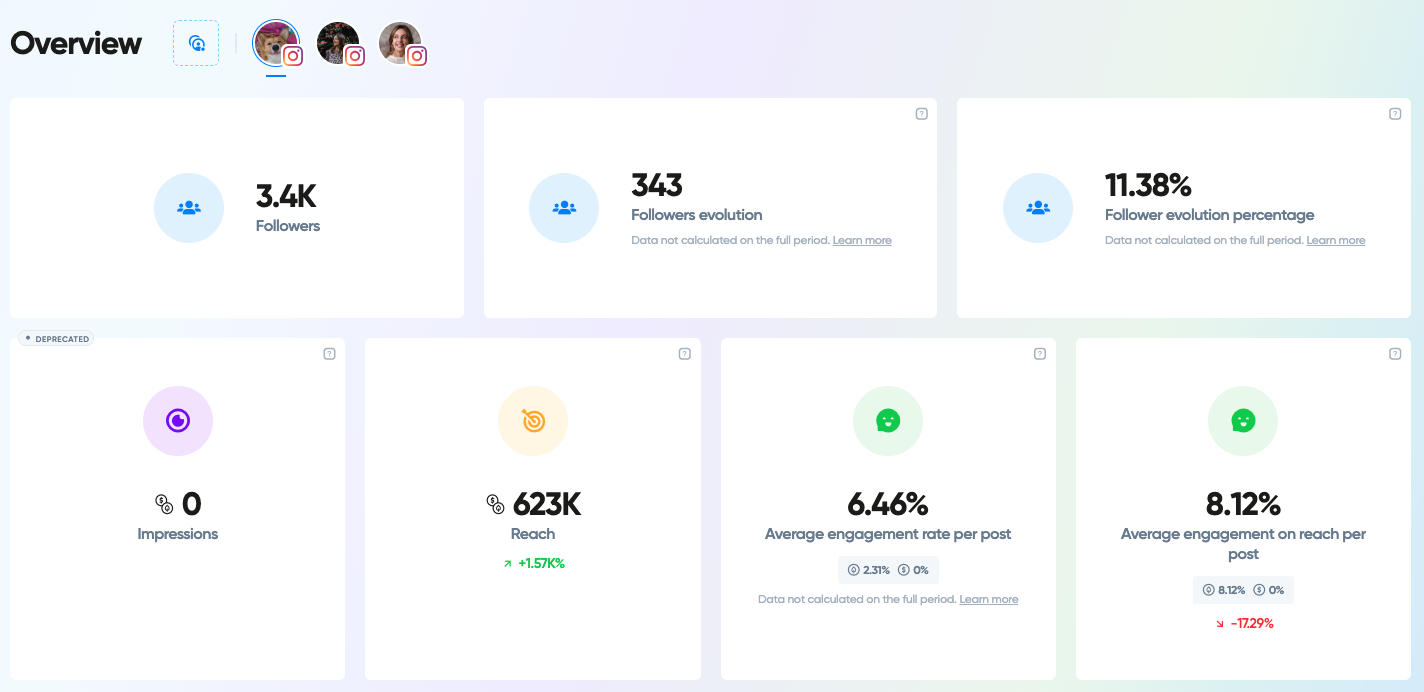
The more profiles you manage, the more moving parts you have. And the harder it is to maintain consistency, measure performance, and stay on top of what’s actually resonating with your audience.
Maybe your Instagram Stories are achieving a high retention rate, but your LinkedIn posts are landing flat. Maybe your Facebook audience engages most with community-led content, while behind-the-scenes videos seem to perform best on TikTok. An audit helps you notice these nuances so you can create smarter, more tailored content across the board.
It also helps you:
Plus, if you're reporting to senior stakeholders or managing a team, a solid audit helps you connect the dots between your content and business outcomes. This makes it easier to demonstrate the value of your work.
Remember – you don’t have to do everything at once. The best audits are methodical and repeatable.
Here’s a step-by-step way to approach it:
Start with the basics: which platforms are you on? This includes the big hitters – Instagram, Facebook, TikTok, LinkedIn – as well as any niche platforms or dormant accounts. Don’t skip the inactive ones; they still represent your brand and could be outdated or confusing (and ready to be removed entirely).
Check profile pictures, bios, banners, contact info, and links. Is your branding consistent? Do your bios clearly communicate what you do, what value you bring, and who you’re for? Small inconsistencies can add up, weakening your brand.
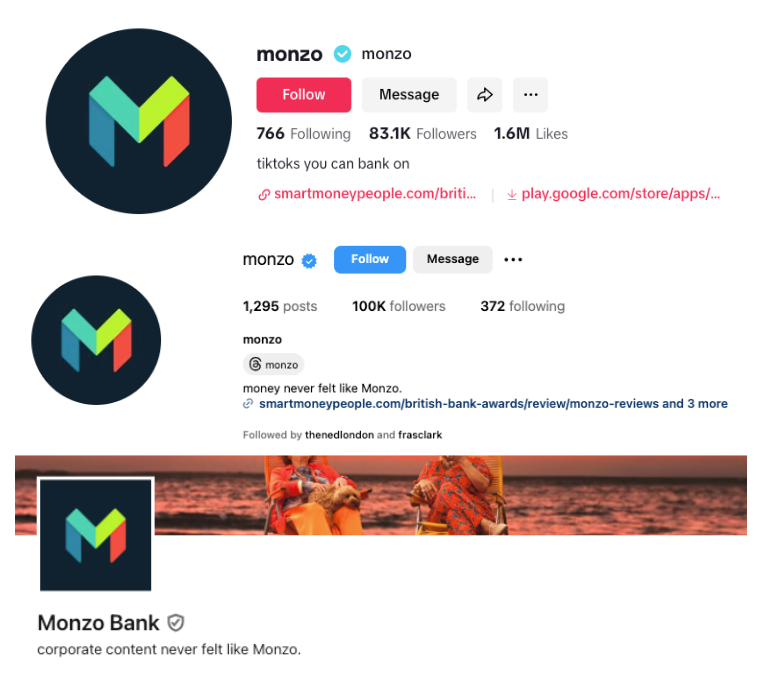
Online bank, Monzo, doesn’t give a lot away in its bio. But its quippy description is consistent (and tailored) across Instagram, TikTok, and LinkedIn.
Dive into the last 30–90 days of content. What performed best and why? Look at formats (Reels, Stories, Carousels), topics, visuals, CTAs. Is there a pattern? Are there clear takeaways about what works on each platform? This is where trends start to emerge.
Followers are nice, but engagement is where the real insight lives. While likes give a broad indication of success, focus more closely on shares, saves, and comments. These are active forms of engagement that are far more valuable than a passive ‘like’. How are people actually interacting with your content? Are your accounts growing steadily or stagnating? Any sudden spikes or dips?
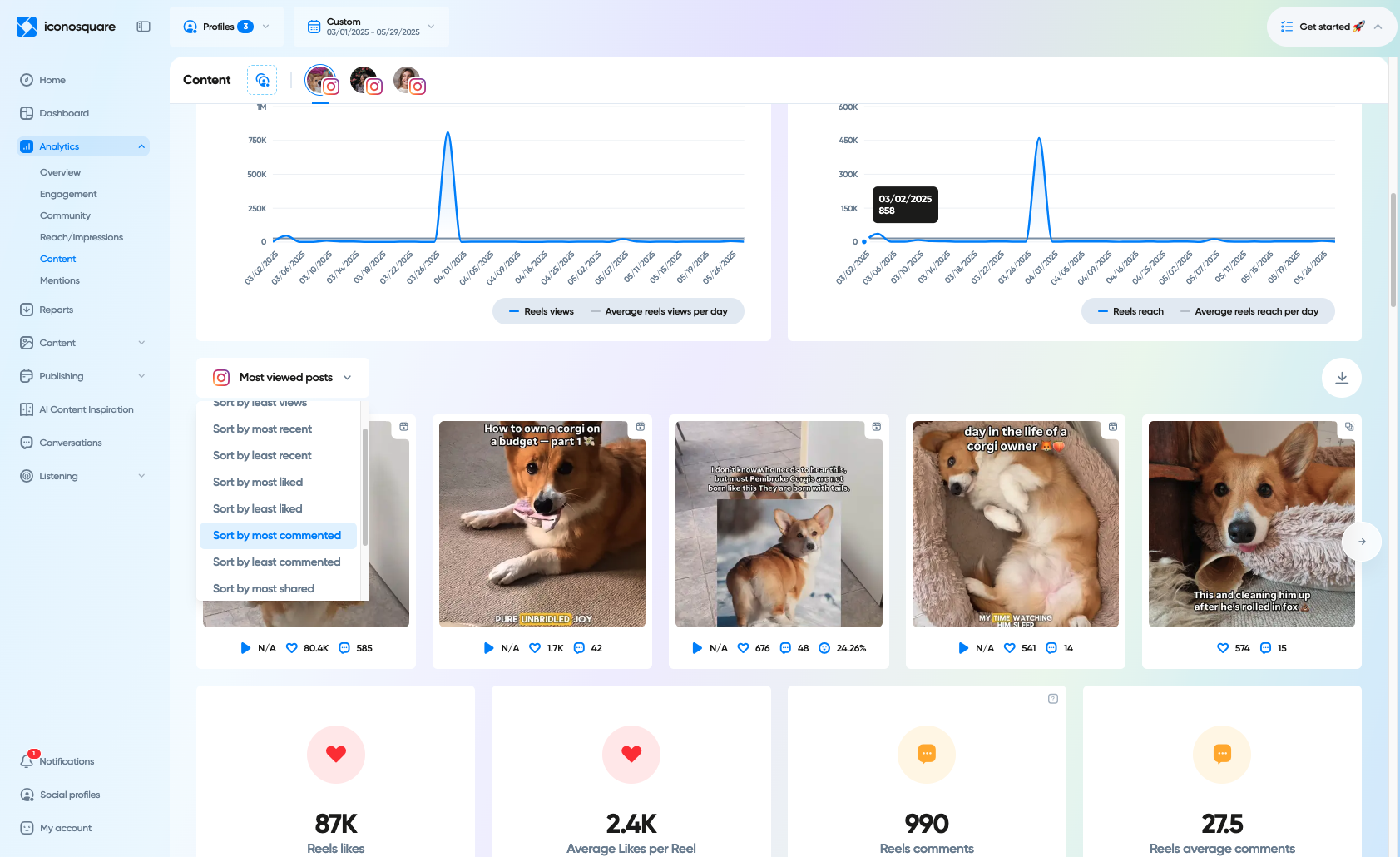
Inside my Iconosquare dashboard, I can see what posts generated the most views, shares, comments, likes, and reach over a time period of my choosing. Here I’m looking at the last 3 months.
Not all platforms need equal investment. If an account is consistently underperforming despite your best efforts, it might be time to rethink your strategy. Could you test a new approach – or is it time to scale back?
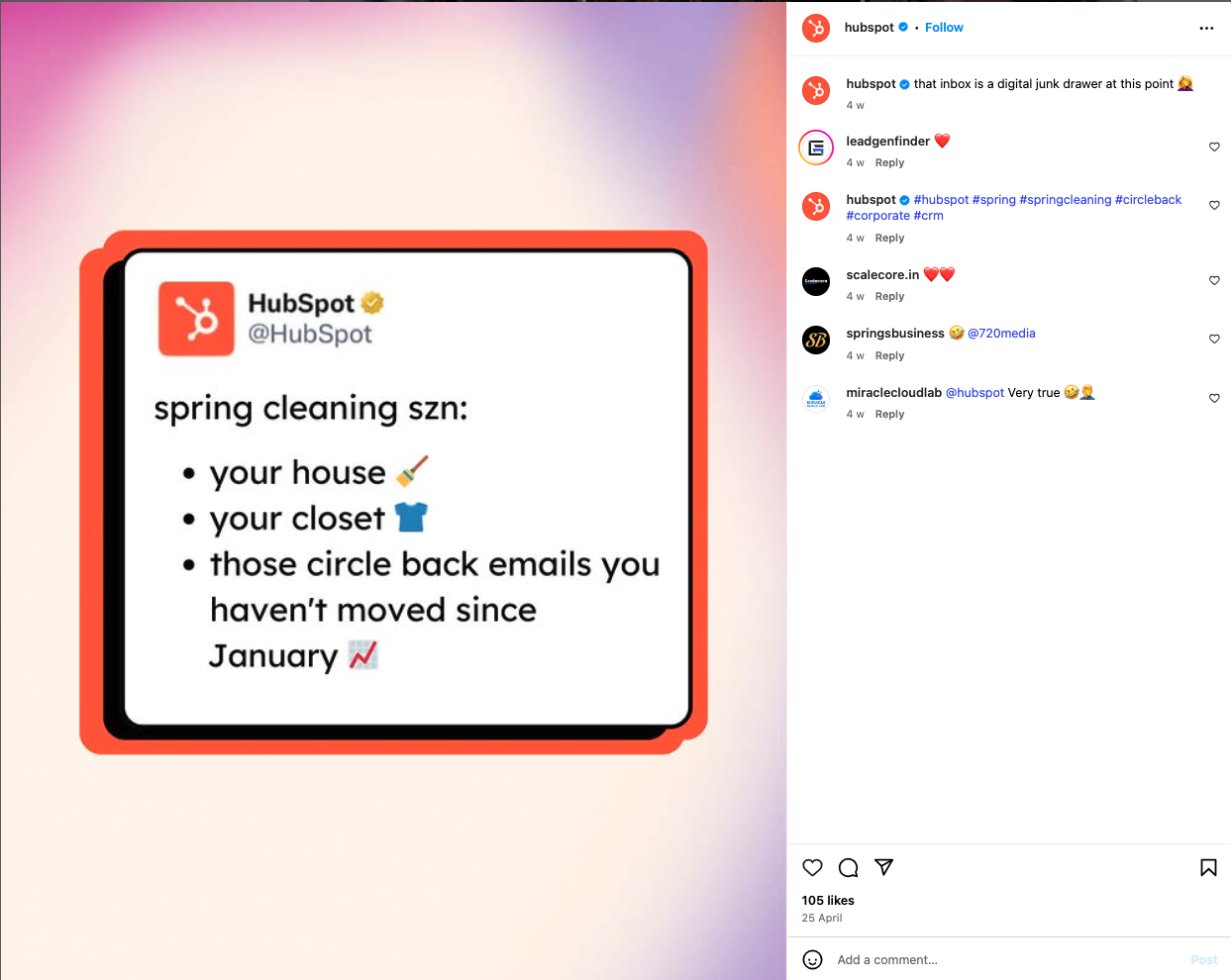
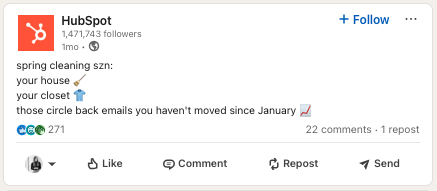
Find posts that could be repurposed or updated. A well-performing video on TikTok could become a Reels snippet. A carousel could be turned into a blog or email segment – or vice versa. Don’t reinvent the wheel every time.
Here’s a great example of HubSpot repurposing the same content across LinkedIn and Instagram.
Your social presence doesn’t exist in a vacuum. A quick competitor check-in helps you spot opportunities and sense-check your benchmarks. Look at what formats work best for them.
How often are they posting? Are they seeing strong engagement? You won’t get access to exact figures, but audit tools like Socialinsider can help estimate. Pay attention to tone, visuals, and cadence. You don’t need to copy competitors – but if their content shines where yours struggles, there’s something to learn from that.
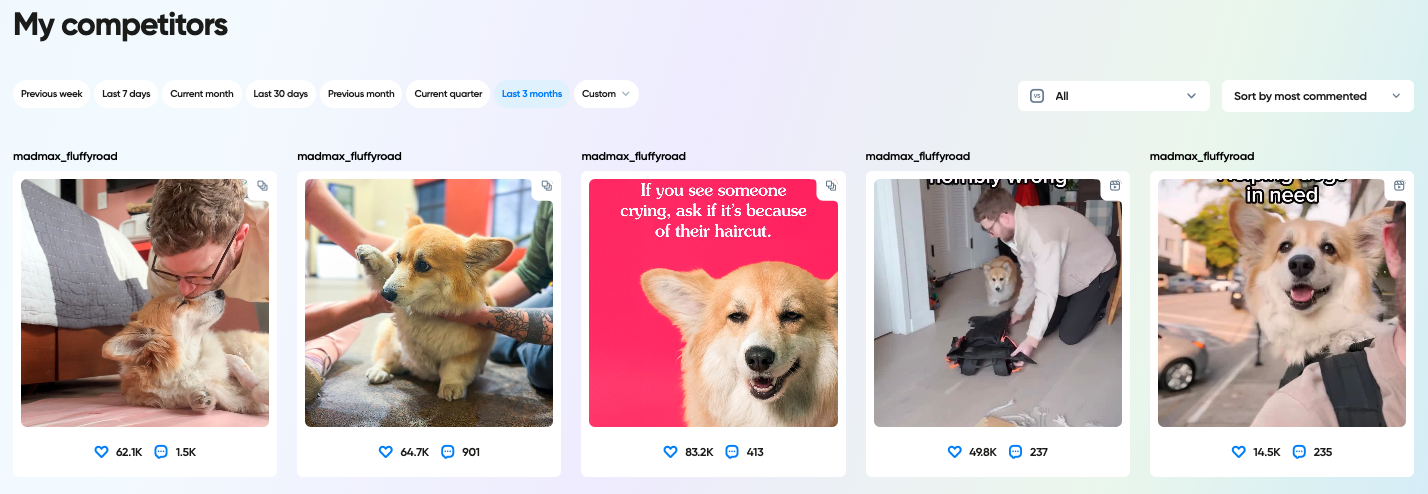
Inside my Iconosquare dashboard, I can keep an eye on my competitor – @madmax_fluffyroad – to see her most engaging content. A great source of ideas!

You can use Iconosquare’s AI Content Inspiration tool to help execute your action items and come up with new ideas.
Capture your insights in a central doc or dashboard. This will make it easier to track progress over time and share findings with your wider team or leadership.
Each platform comes with its own set of metrics, but there are some essentials worth paying attention to:
If you’re managing multiple accounts, you’ll also want to consider:
Tracking these consistently will help you allocate resources wisely and focus on the platforms that deliver the most value.
Running a social media audit manually across multiple platforms is possible, but let’s be honest – it’s a lot.
Iconosquare makes the process infinitely easier by bringing everything into one place.
You can:
You can even benchmark your content against competitors, helping you understand how your content stacks up in your industry – and where you can improve.
If you'd like to get a free audit, Iconosquare has you covered with its Instagram audit and Facebook audit.
Your audit should give you a clearer picture of what’s working, what’s not, and where to focus next. But don’t let the data sit in a spreadsheet.
Use your insights to:
It’s also the perfect moment to loop in your team or client and get buy-in on any new direction. Regular audits can become part of a wider feedback and planning process.
When you're juggling multiple social profiles, it’s easy to get caught up in constant content creation and output, without pausing to assess the impact. But a regular audit forces you to zoom out, evaluate, and adjust.
The result? Less time guessing. More time doing what works.
A great audit brings clarity, alignment, and strategy back into your social media marketing. And when you’re managing multiple accounts, that clarity is everything.
To help you with your next audit, why not try Iconosquare? You can sign up for a free trial today. No credit card required.
![Iconosquare is free for 14 days! With Iconosquare, take your social media in another level. Experience the easiest-to-use platform on the market for free ��{{ include_custom_fonts({"Gilroy":["Audacieux","Moyen","Semi-gras"]}) }}](https://hubspot-no-cache-eu1-prod.s3.amazonaws.com/cta/default/143669362/interactive-258640909509.png)

London-based marketing strategist, social media expert, and Skillshare instructor. Bella grew social media communities from scratch for Canon, Disney, and Quorn before going independent in 2020. Featured in The Telegraph and Lonely Planet, she writes Iconosquare guides on social media strategy, community building, and brand growth across every platform.
With Iconosquare, take your social media in another level. Experience the easiest-to-use platform on the market for free 💙